Understanding Madhubani Painting
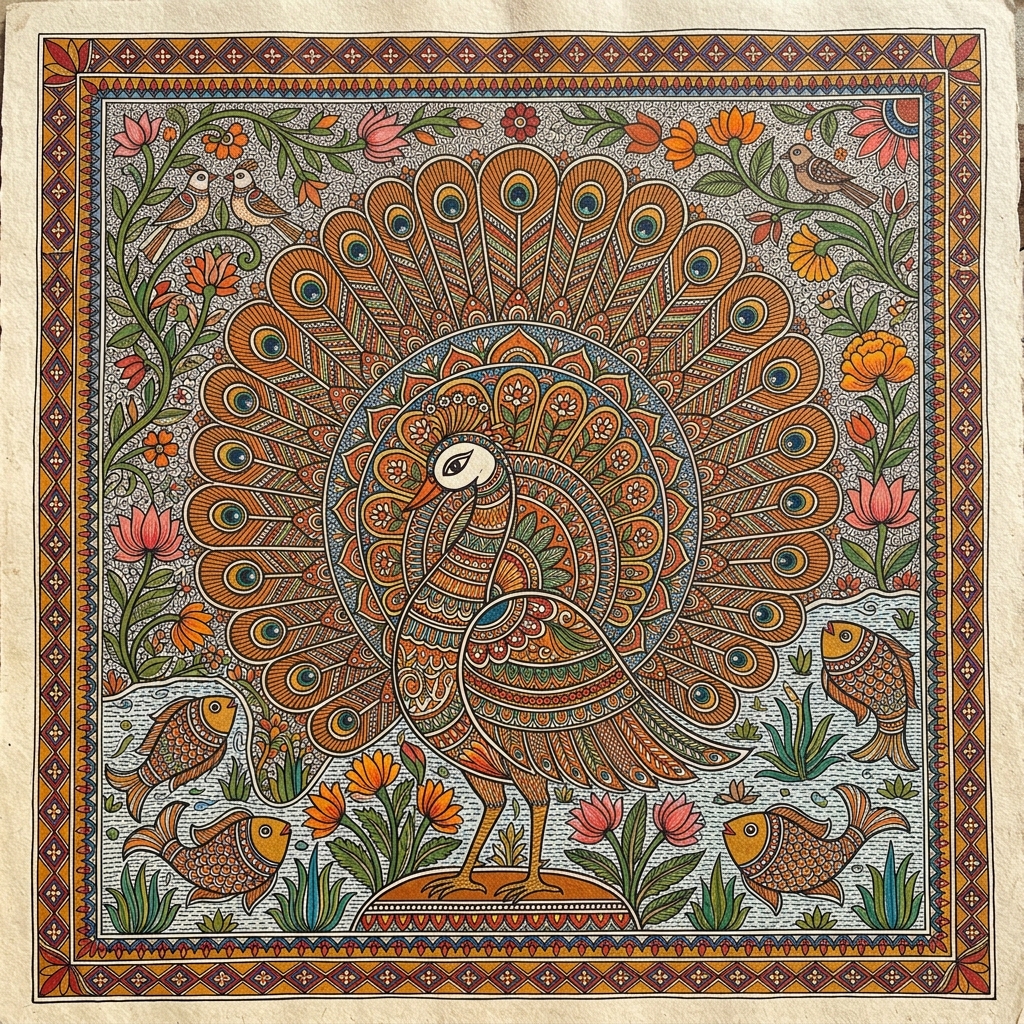
Originating from the Mithila region of Bihar, Madhubani painting (also known as Mithila painting) is a brilliant tapestry of color, mythology, and cultural identity. For centuries, this art form was a closely guarded tradition, passed down from mothers to daughters, turning simple courtyards into spaces of ritualistic beauty and storytelling.
Mythological Beginnings
According to local legend, the history of Madhubani painting dates back to the time of the Ramayana. It is said that King Janaka of Mithila commissioned local artists to paint the entire kingdom to celebrate the wedding of his daughter, Sita, to Lord Rama. Ever since, the women of Mithila have kept this tradition alive, painting the mud walls and clay floors of their homes during major life events, festivals, and harvests.
The Five Distinct Styles
Madhubani painting is not a single uniform style; rather, it is divided into five distinct sub-styles, each with its own visual code:
- Bharni: Characterized by rich, vibrant colors (like orange, red, and yellow) filling in bold black outlines of mythological characters.
- Katchni: Emphasizes line drawings, cross-hatching, and intricate patterns. The colors used are minimal, often just red and black.
- Tantrik: Centered around spiritual and mystical symbols, depicting forms of cosmic energy and deities like Kali and Durga.
- Godna: Inspired by traditional tattoo art, using repeating geometric circles, lines, and patterns of nature.
- Kohbar: Symbolic art created in the nuptial chamber, filled with fertility symbols like fish (representing good luck), lotuses, and tortoises.
A Palette of Natural Dyes
What sets authentic Madhubani art apart is its absolute reliance on natural pigments. Black is gathered from lamp soot mixed with cow dung; yellow is extracted from turmeric or the pollen of marigold flowers; red comes from local clay or kusum flower petals; blue is sourced from indigo; and green is made from wild apple leaves. These pigments are applied using matchsticks, twigs, fingers, and fine brushes made of animal hair, resulting in highly saturated, long-lasting colors.
“What makes Madhubani art unique is the complete absence of empty space. The gaps between main figures are filled with intricate drawings of flowers, birds, and geometric patterns, creating a sense of horror vacui.”
From Mud Walls to Handmade Paper
In the late 1960s, a severe drought struck Bihar, threatening the livelihoods of rural communities. To stimulate the economy, the government encouraged the women of Mithila to paint their traditional designs on handmade paper for sale. This transition catapulted Madhubani painting into the commercial art market. Today, Madhubani is recognized worldwide, appearing on canvas, sarees, pottery, and even trains, transforming a localized ritual into a celebrated emblem of Indian folk heritage.
Madhubani art is more than just decoration; it is a visual language of hope, blessing, and relationship. Through its vivid colors and continuous lines, it tells the story of a resilient community that found a way to share its heritage with the world.
Do you have a story to tell?
Mad Strokes is built on collaboration. If you are an artist, writer, or art enthusiast with deep roots in Indian heritage, help us write the next chapter.